
One connection and the entire booth runs
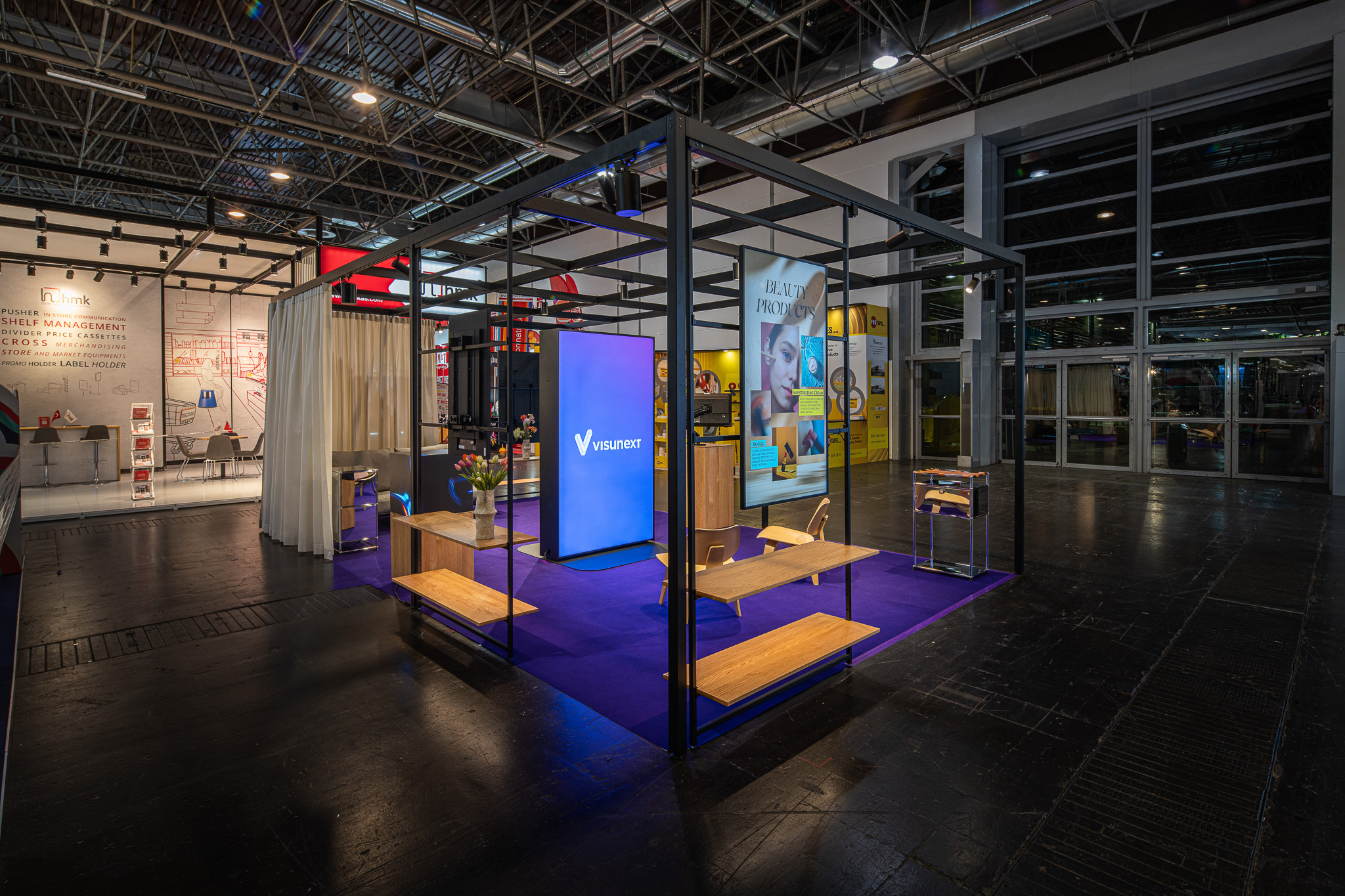
A trade fair booth in two days
visunext builds a 30 square meter space with Spatio
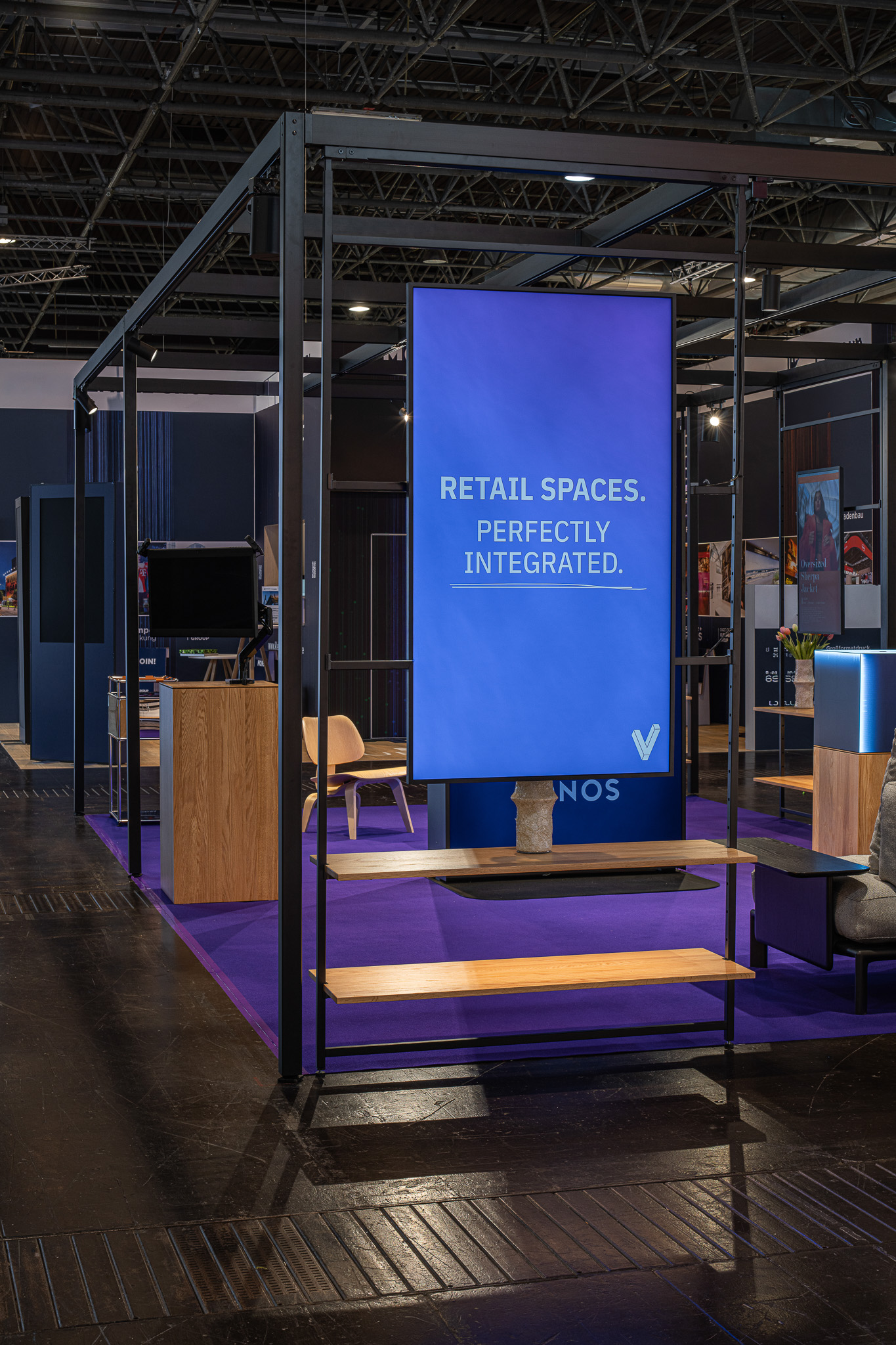
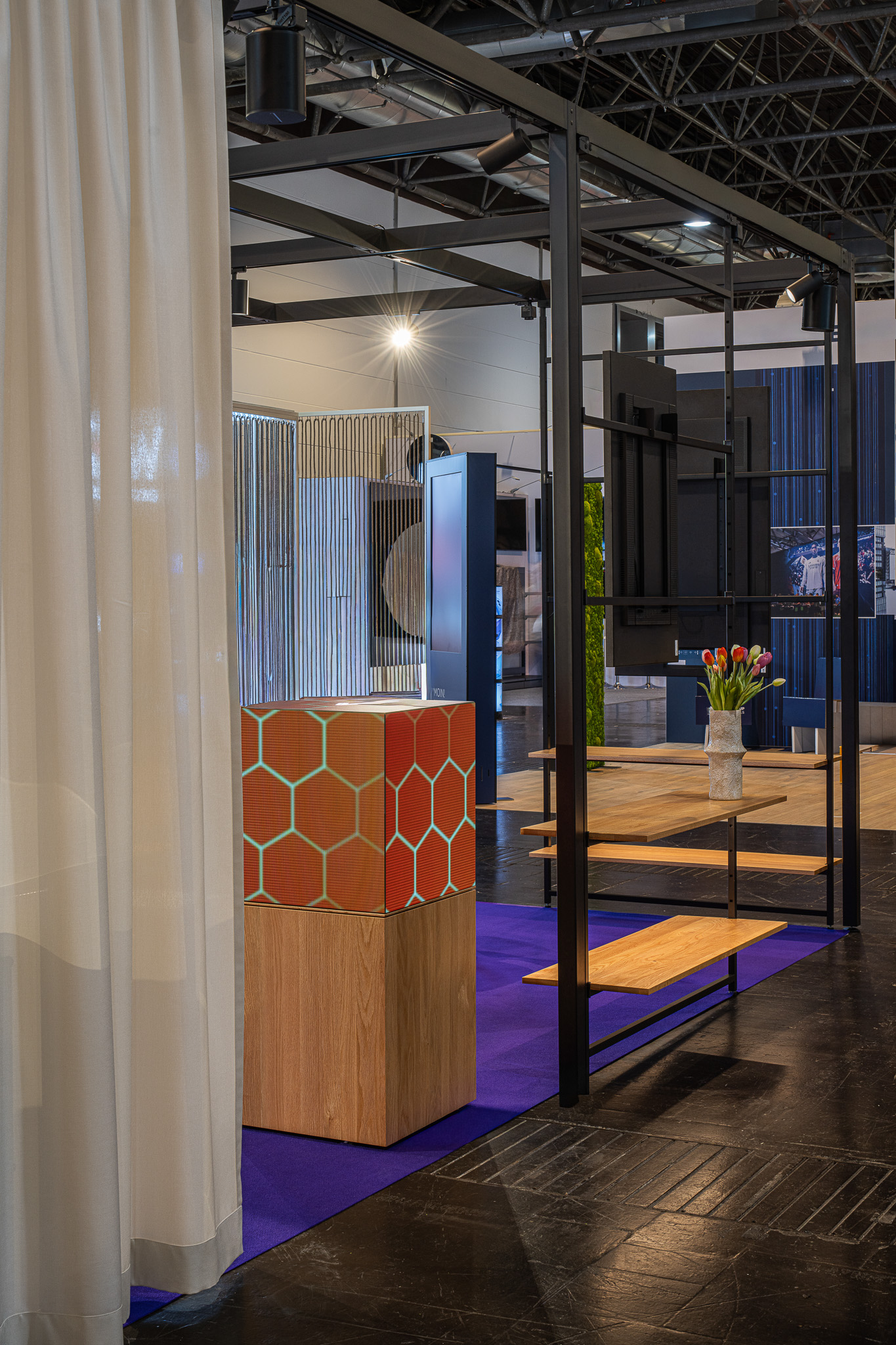
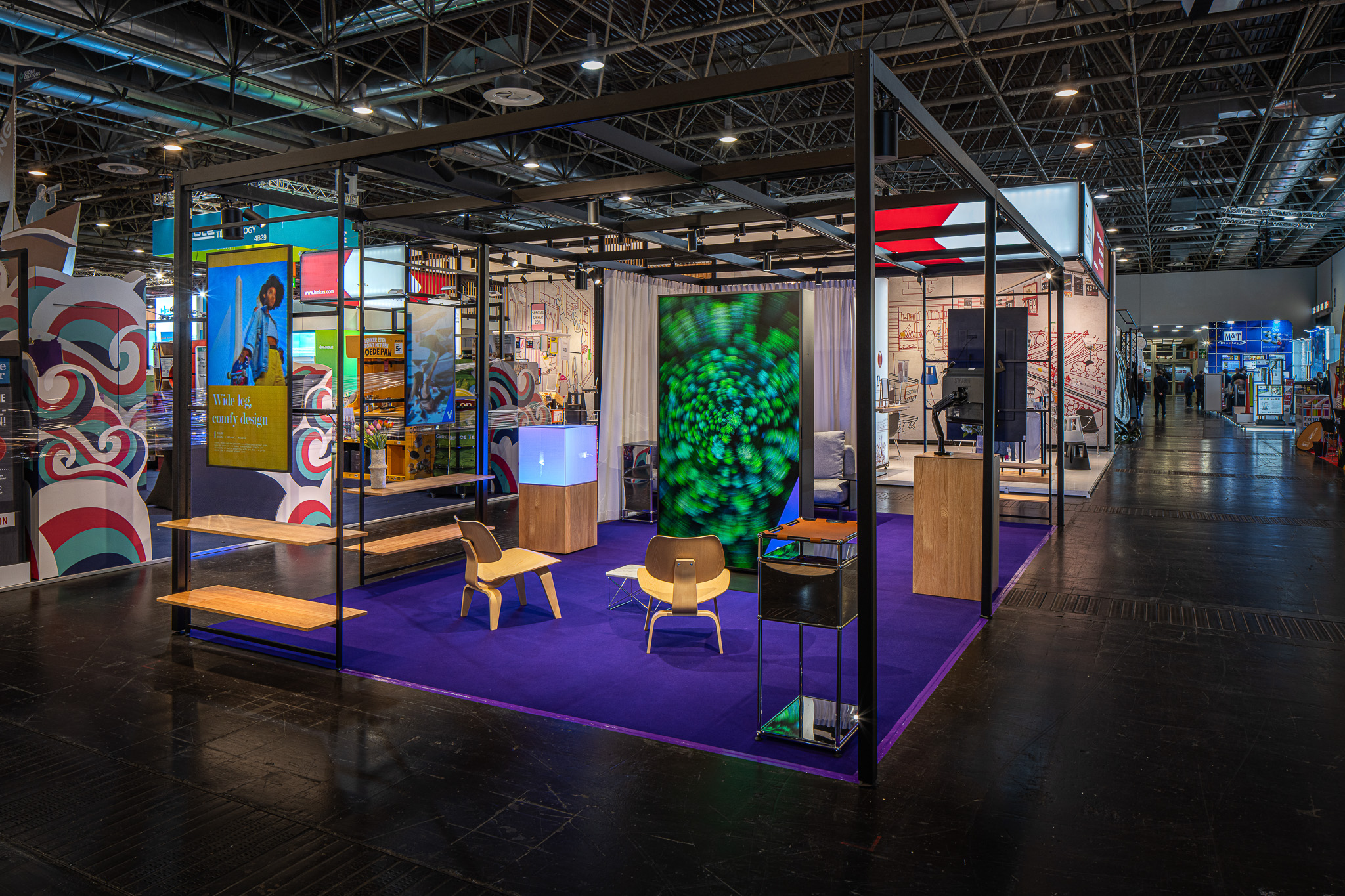
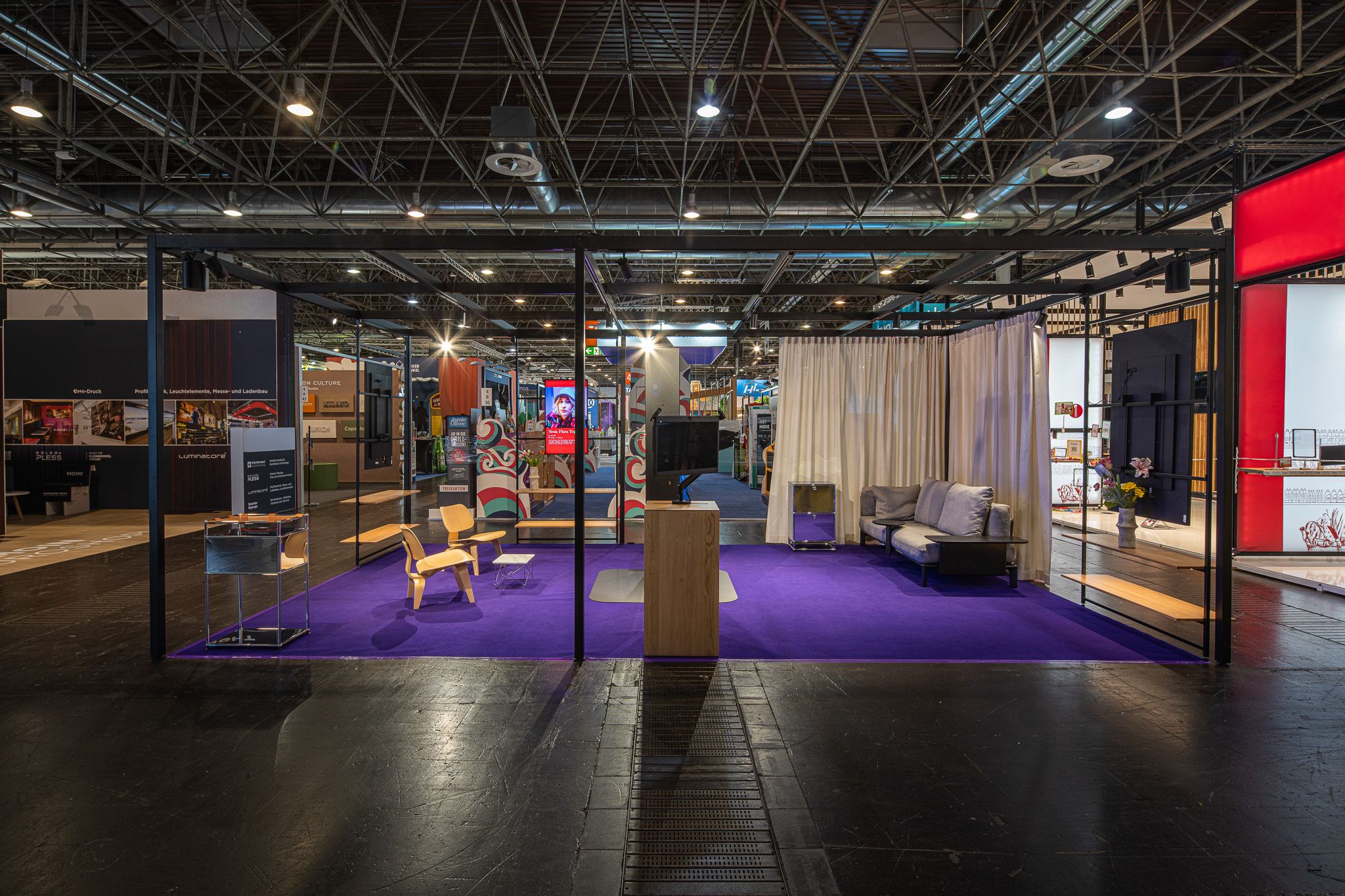
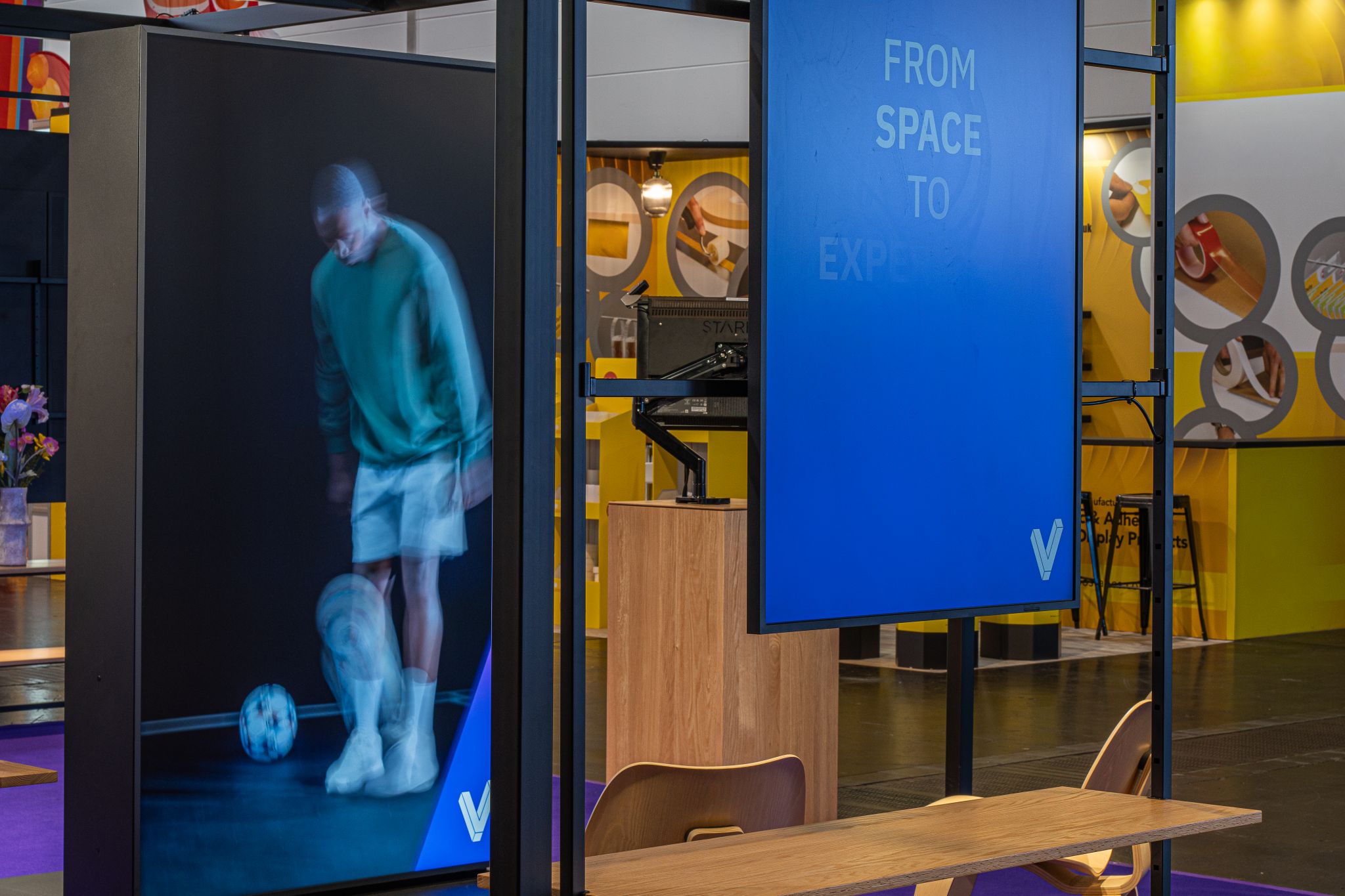
The visunext project created a fully equipped area of around 30 square meters. Spatio forms the basis of the concept and combines structure and technology in one system. A single power connection was enough to operate the entire setup.
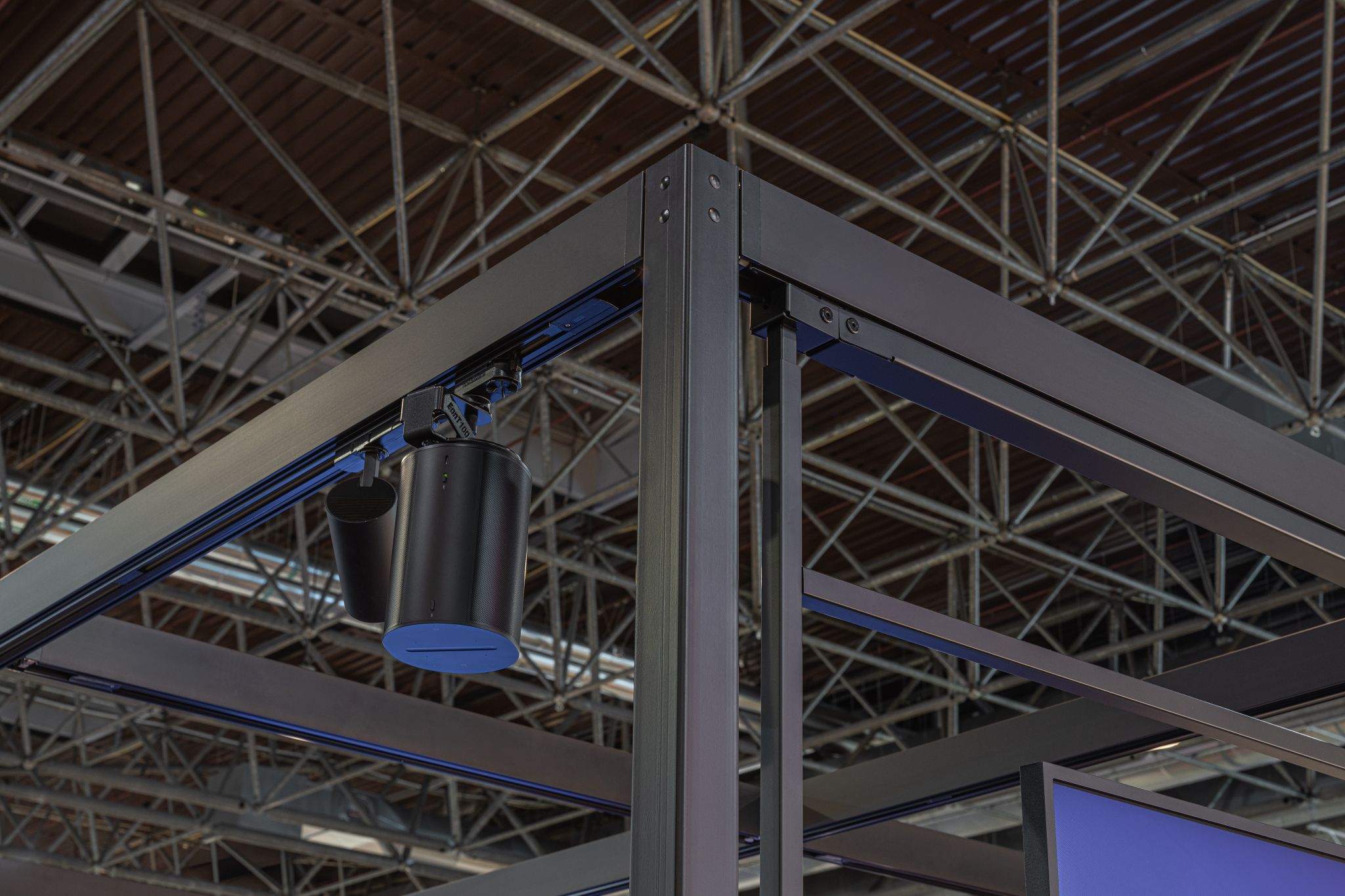
“We built a complete trade fair infrastructure including structure, screens, speakers, lighting and curtain solution,” says Axel Niclas. “It was important for us that everything is technically integrated and at the same time creates a high quality appearance.”
Technology and space planned as one
visunext positions itself as an integrator for media technology. The company plans and delivers projects holistically. Displays, audio technology and full spatial solutions including furniture and interior construction form one concept.
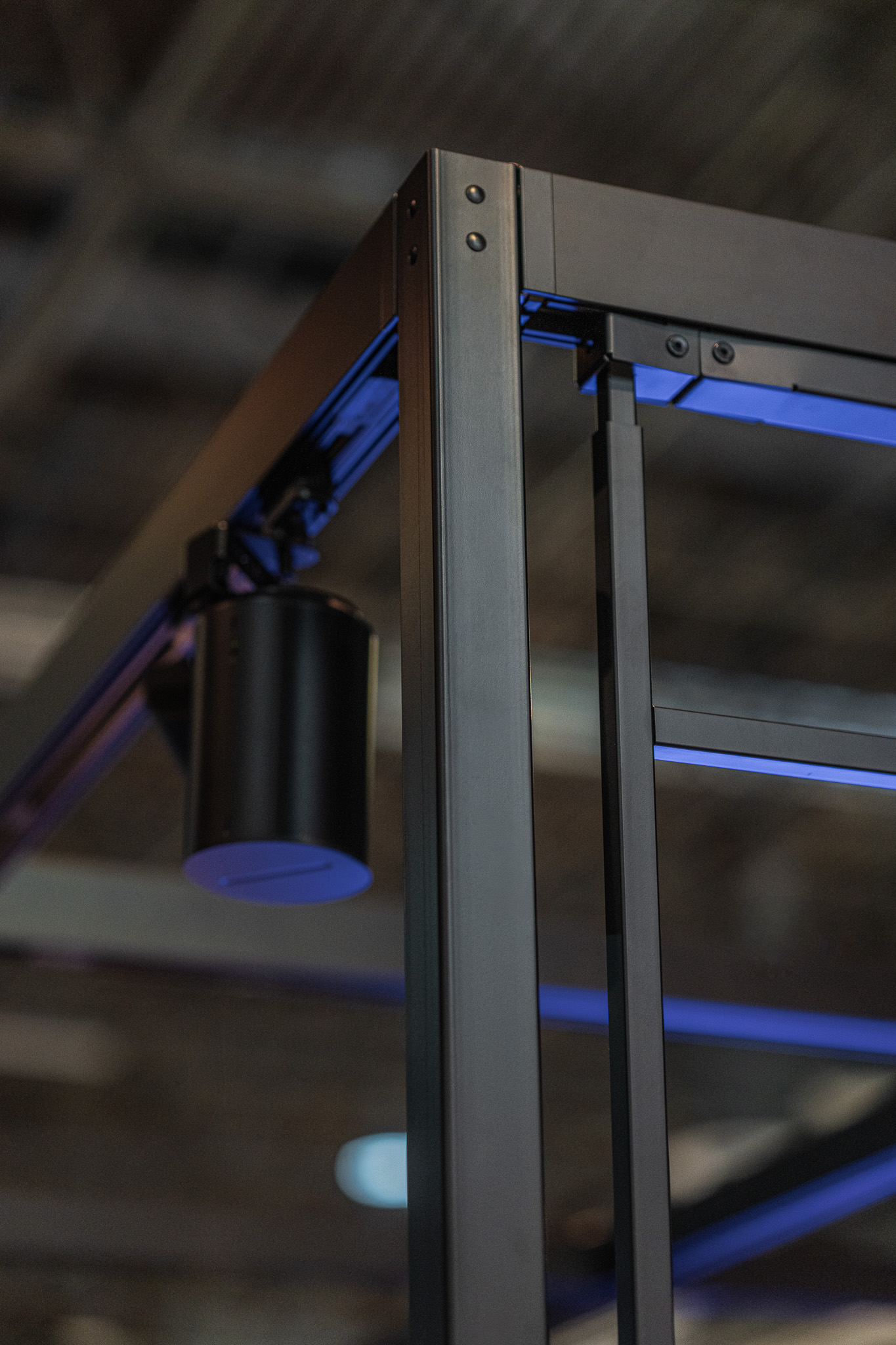
Modular systems provide the spatial foundation. Power supply, media technology and lighting integrate directly into the structure and remain flexible to organize. This creates spaces that adapt to different requirements. No drilling. No complex electrical installation.
Digital planning as the foundation
The basis for these spatial solutions already begins during planning. Digital system data integrates directly into planning software and simplifies the process.
“We loaded the 3D data into pCon and could start immediately. This makes internal coordination and collaboration with partners much easier,” Niclas explains.
Flexible spaces instead of fixed walls
In office environments, modular structures can replace traditional drywall solutions. Teams can build, modify or remove spatial zones without structural intervention.
This flexibility becomes especially visible in temporary office setups. “Two hours after the fair everything was dismantled,” says Niclas.
Workspaces can therefore be reorganized at any time. This supports relocations and changing spatial needs.
Flexibility as a system principle
“Spatio works well because it is flexible and fast to assemble. If you participate in several trade fairs per year you need a system that adapts to different booth sizes without planning from scratch every time,” Niclas explains.
After the event visunext can store the elements and reuse them in future projects. The system stays in use over many installations and reduces material consumption and planning effort.
What feedback did visitors give?
The response was consistently positive.
“Many visitors were surprised how clean and high quality the system looks and how simple it works. The combination of sustainability, flexibility and integrated technology generated strong interest.”
More stories
All stories-
 Spatio – A System that grows with you
 -
 Visplay at the Real Estate Arena 2025
 -
 Electrification
 -
 NeoCon 2025: Omnio Office awarded in Chicago
 -
 Interview with Sven Erni
 -
 AirClad | Visplay - The Future of Mobile Retail
 -
 Flow Showroom
 -
 Mobile und Modular – The new Qubo M
 -
 Flexible walls for Multi-Lane
 -
 Workation in Mexico
 -
 Visplay's History
 -
 Hybrid pharmacy